
My Role: UX Designer
Timeline: 2 Months
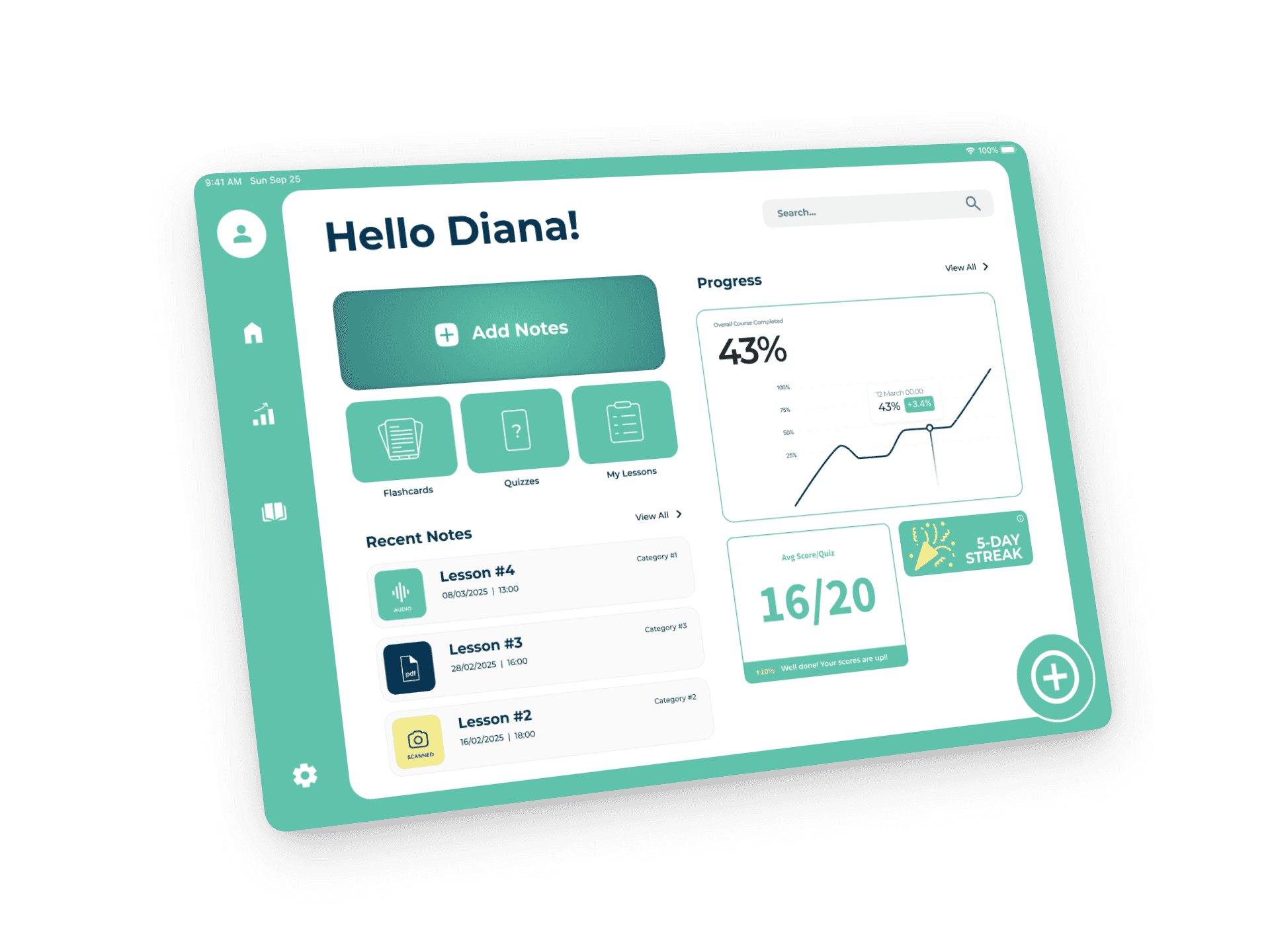
Overview
About Project
TutorVerse is a digital study tool created to reduce the time students spend organizing notes and increase the time they spend learning. The platform supports multiple input formats—including handwritten notes, document uploads, and audio—and transforms them into structured, accessible study content.
Keywords: Research, Interviews, Wireframe, Prototyping
Team: 4 Designers
Process: Double Diamond Methodology
How i was involved
I worked as part of a small design team and contributed across the full UX process, including:
Defining user flows and core tasks
Designing wireframes and mid-fidelity screens
Supporting usability testing and synthesis
Iterating on navigation, labeling, and layout
Contributing to the high-fidelity prototype
Students often study using a mix of handwritten notes, documents, and recordings. These materials are scattered across devices, difficult to revisit, and rarely optimized for review.
What was the process?
We followed the Double Diamond approach, starting with research and student interviews to understand study habits, pain points, and accessibility needs. We synthesized these insights to define the core problems, then explored multiple layout and flow ideas through sketches and early designs. We moved into mid-fidelity prototypes to test key tasks such as uploading notes, creating flashcards, and tracking progress. Usability testing helped us identify friction in navigation and clarity, which informed iterative refinements. The process concluded with a high-fidelity mobile and tablet prototype focused on clarity, accessibility, and efficient studying.
What roadblocks we faced
We encountered several challenges during the project. The academic timeline was limited, which constrained the depth of research and iterations we could perform. We also had no access to real user data, so we conducted interviews with three participants to gather insights and validate our assumptions. Additionally, the project scope was limited to a prototype, and the feature set was broad, requiring careful prioritization to focus on the core study actions. These constraints guided us to concentrate on the most critical functionality and validate our design decisions through usability feedback.
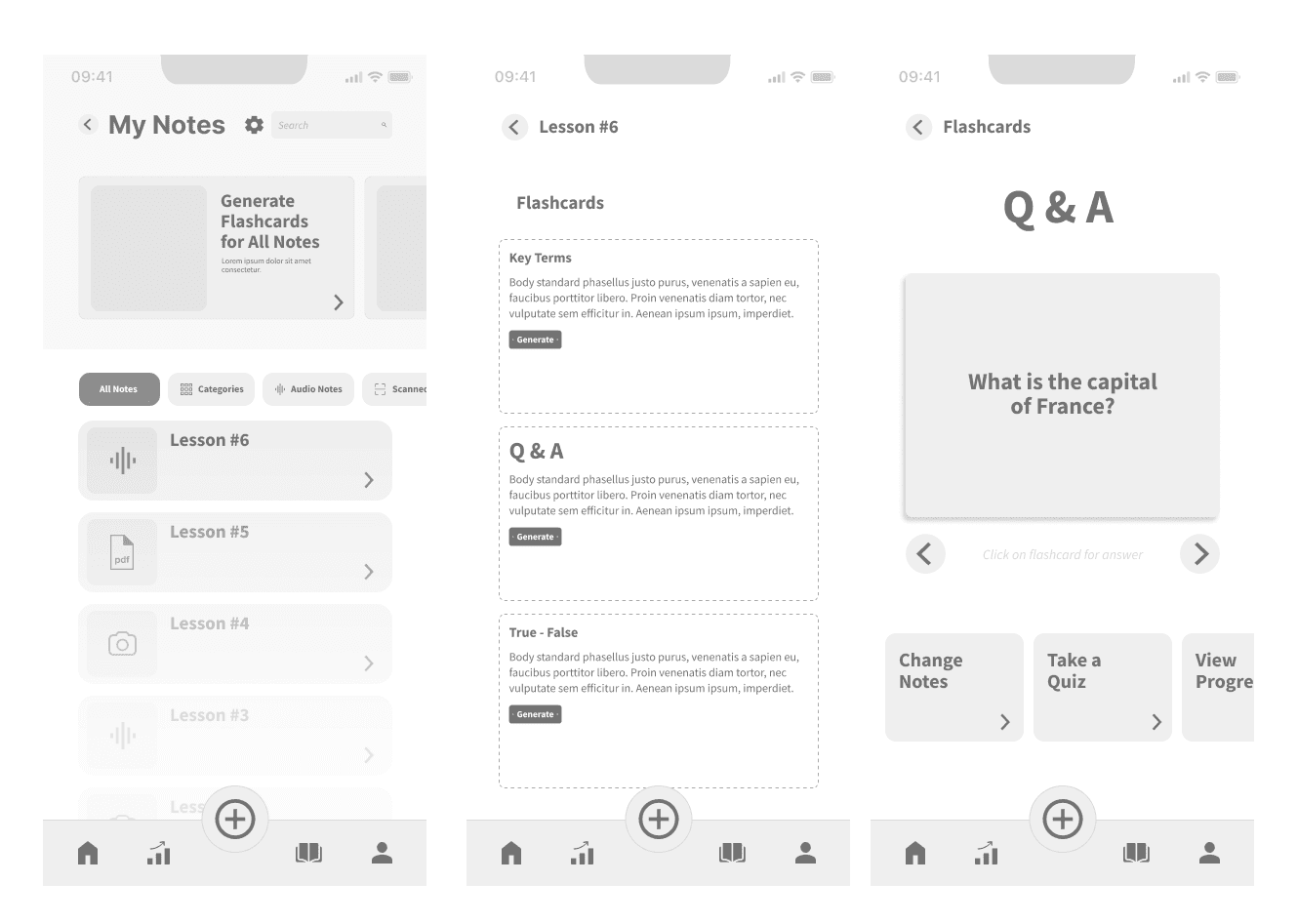
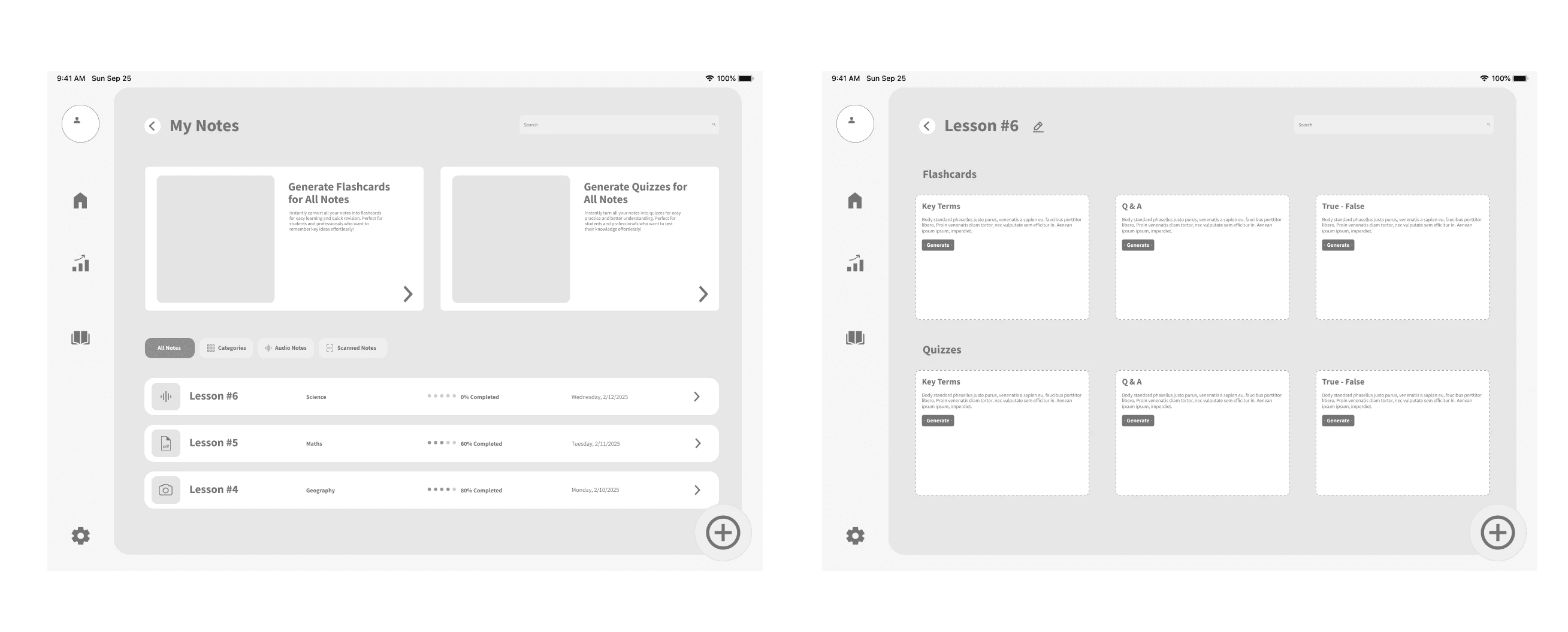
Wireframes
We started with wireframes then moved onto high-fidelity wireframes
What solution did we include?
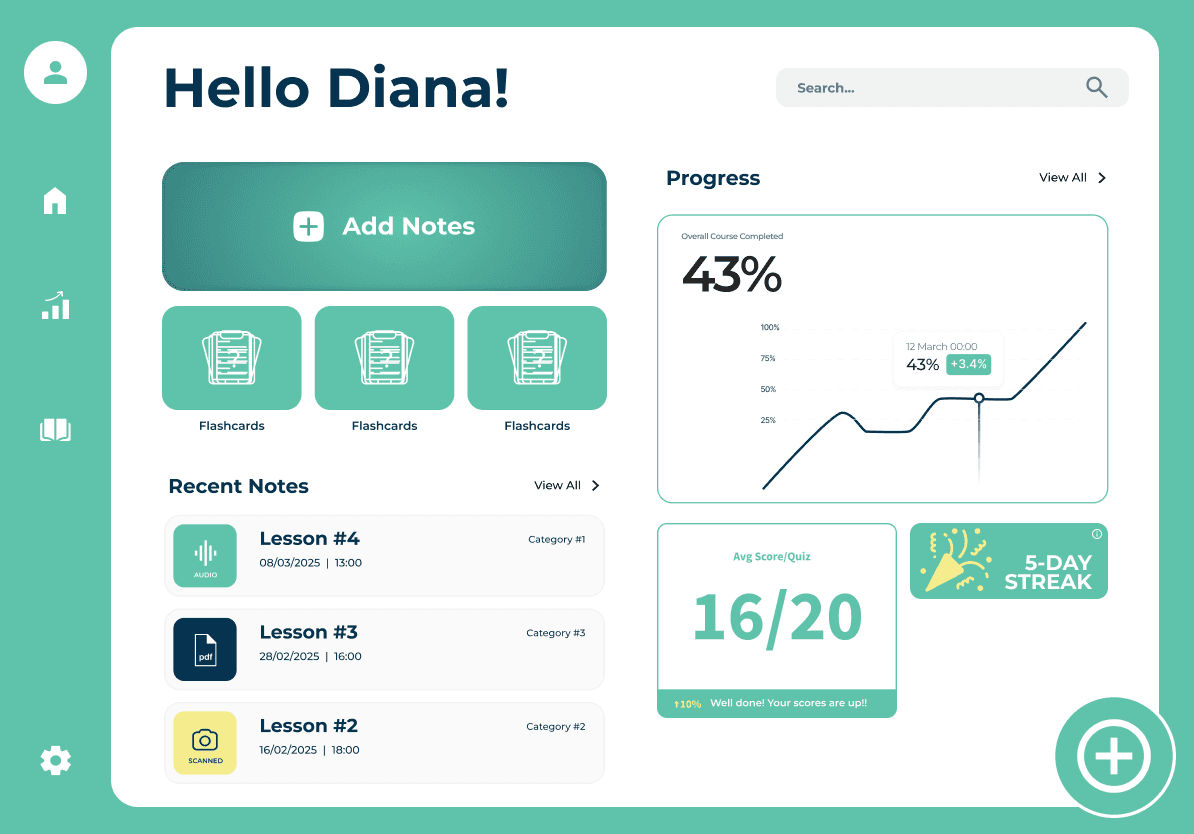
Final Design
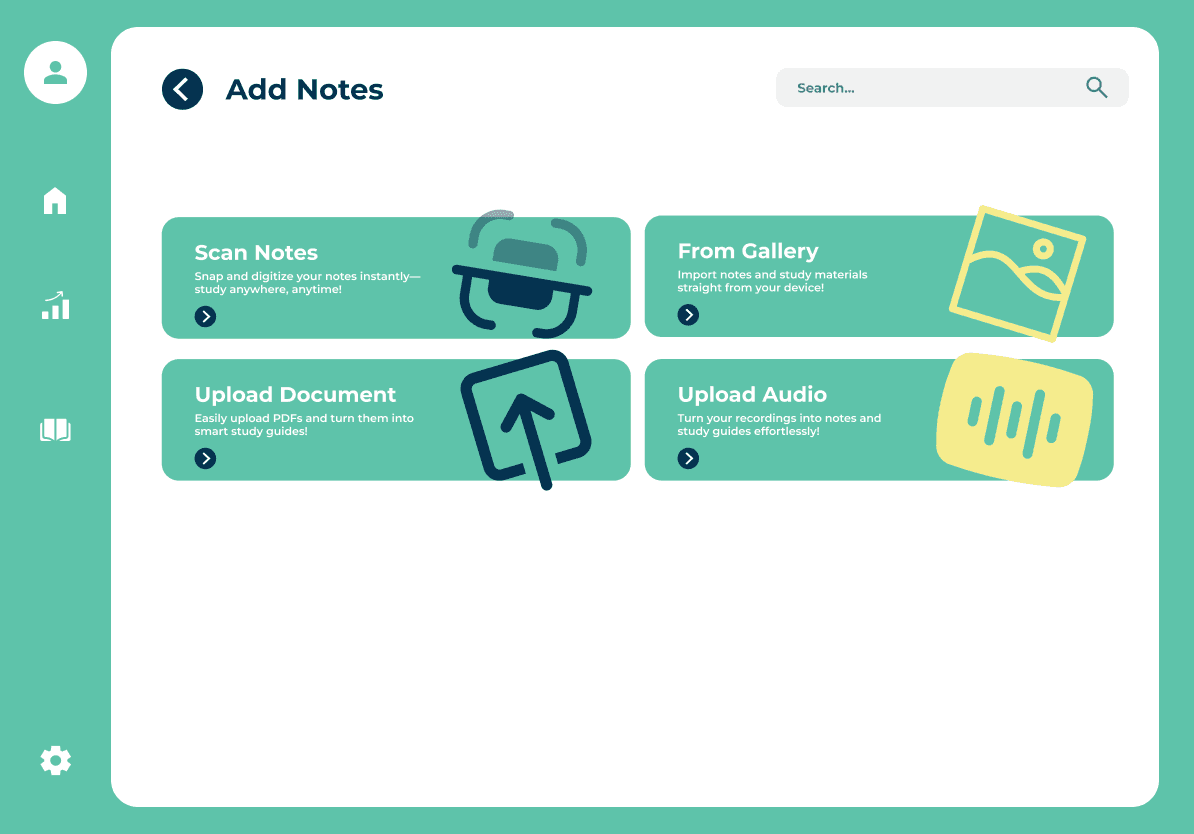
The final design turned the wireframes into high-fidelity dashboards with clear visuals and easy-to-use interactions.
Note: This project was completed as part of an academic course. All research, design, and prototyping were conducted within the scope of the class assignment.